
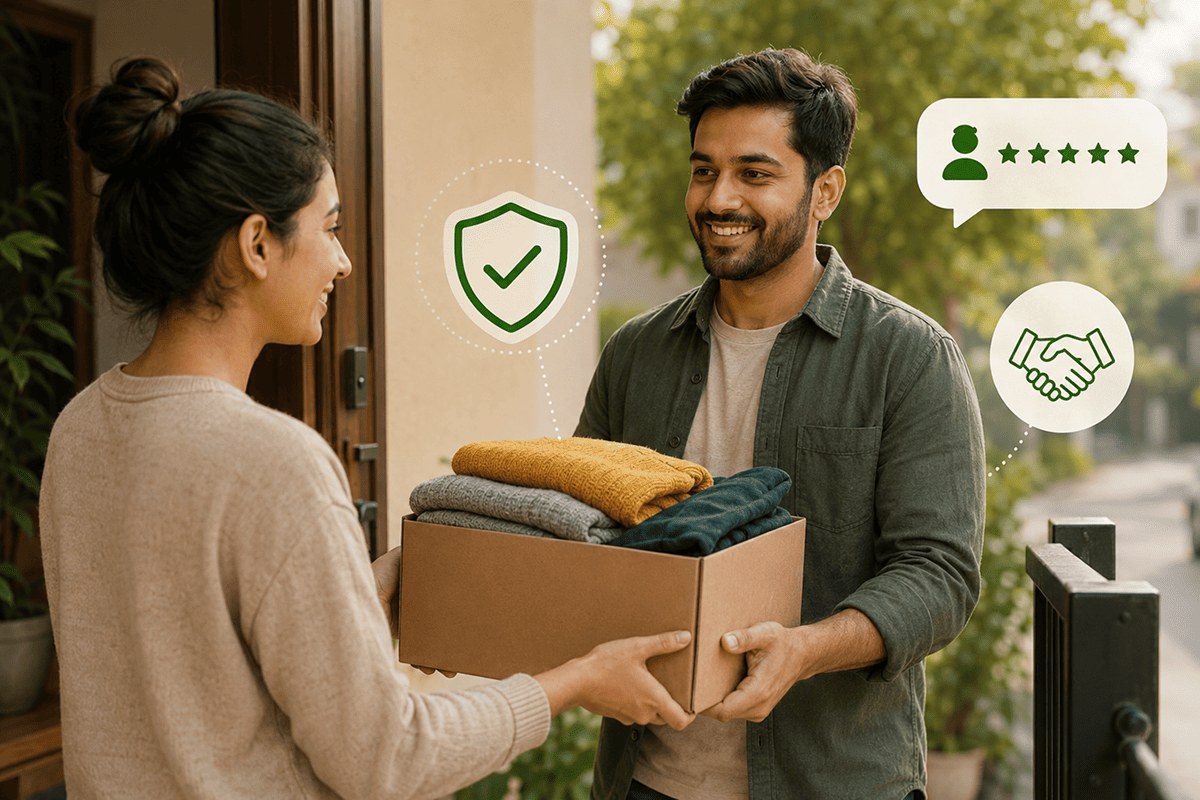
Yes, as long as the platform confirms who's showing up before you hand anything over. The main risk in giving items to strangers isn't theft. It's no-shows, wasted trips, and having no record of what was agreed. GiveLocally is built around two mechanisms for that: a one-time OTP pickup code, and a karma score.
The OTP pickup code
Every exchange gets a unique, one-time code. As a giver, you don't share this code when you agree to give something. You share it only when the receiver physically arrives to collect it. Entering the code is what confirms the pickup happened.
This solves the classic problem with informal donation groups (WhatsApp groups, community boards): there's no way to prove an exchange took place, so disputes ("I told them to pick it up") are common and unresolvable. With an OTP, both sides have a clear, timestamped confirmation.
The karma score
Every completed exchange raises your karma score. Every no-show or bad-faith claim doesn't. Before confirming who to give an item to, you can see the karma score of anyone who's claimed it, so if two people want the same sofa, you can choose the one with a better track record.
Low-karma users lose visibility over time, so the system self-corrects: people who don't follow through get filtered out naturally, without anyone having to manually report them.
Why the ₹9 fee matters here too
Receivers pay a small ₹9 commitment fee (processed via Razorpay) when they claim an item. It's not a purchase price. It's small enough to not exclude anyone with a real need, but enough of a cost that it discourages people from claiming items casually with no intention of collecting them.
What happens if something goes wrong?
If an exchange doesn't go as expected, you can raise it directly in the app. Reports are reviewed by a person, not resolved purely by an automated system, which matters for edge cases an algorithm alone would misjudge.
What GiveLocally doesn't do
To be clear about the limits: GiveLocally verifies that a specific handover happened between two app users, via OTP confirmation. It doesn't run background checks on users, and it doesn't inspect the condition of items before listing. The safety model relies on accountability after the fact (karma, dispute review) and confirmation at the point of handover (OTP), not pre-screening. As with any in-person exchange, meeting in a safe, public, or well-lit location for the handover is still good practice.
Frequently asked
What is the OTP pickup code and how does it prevent fraud?
Every confirmed exchange generates a one-time pickup code. The giver only shares this code once the receiver has physically arrived to collect the item. Entering it is what marks the exchange as complete, so there's no way to falsely claim a pickup happened without both people being present.
What is the karma score on GiveLocally?
A reliability rating that rises with every completed exchange. Givers can see a receiver's karma score before choosing who to hand an item to, and low-karma users lose visibility over time.
Why does GiveLocally charge receivers ₹9?
To filter out people who claim items with no intention of showing up. A small upfront cost is enough to discourage casual no-shows without being a meaningful barrier for someone who needs the item.